
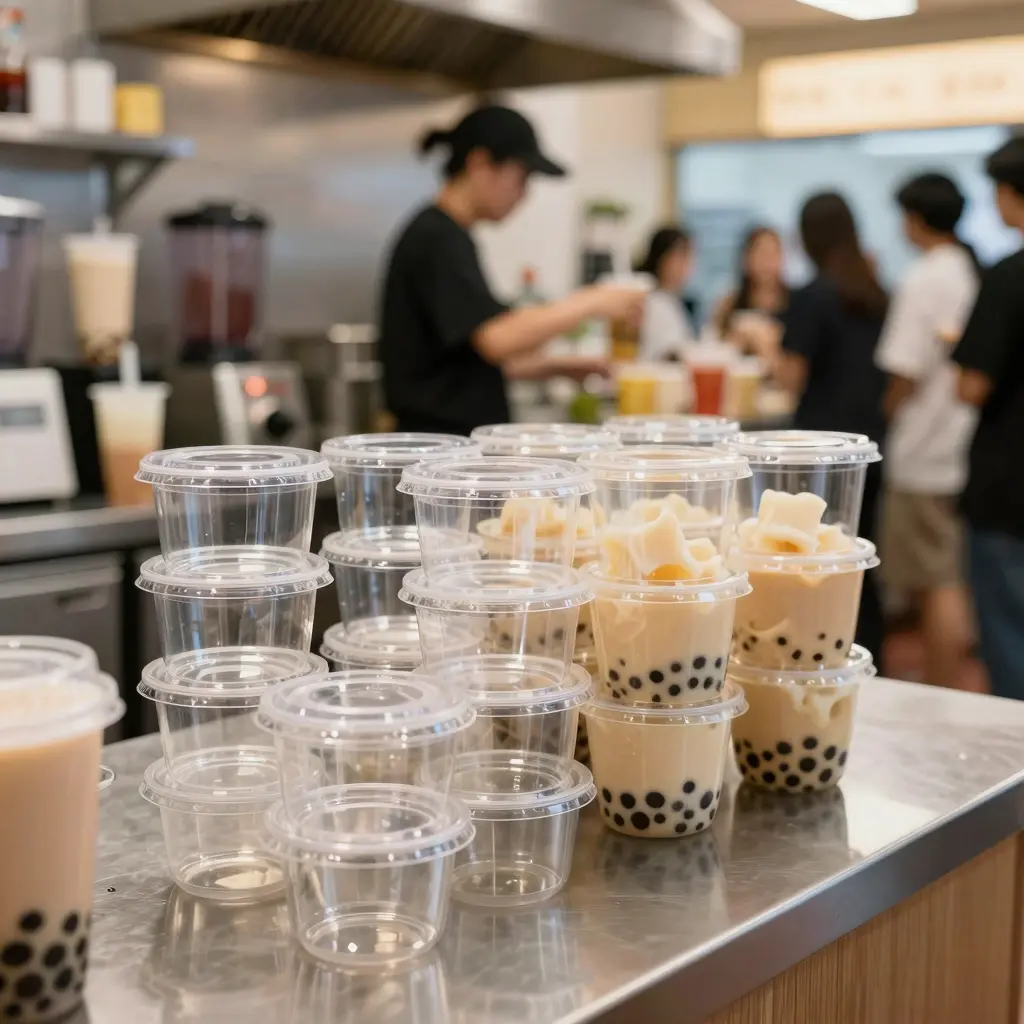
Picture this: It’s Friday afternoon, your bubble tea shop is packed with a line stretching to the door, blenders are whirring, tapioca pearls are being scooped, and you reach for your stack of portion cups-only to find the shelf is completely empty. Your staff starts scrambling, customers grow impatient, and that perfect rush-hour rhythm shatters into chaos. Whether you run a bustling restaurant, a mobile food truck chasing the lunch crowd, or coordinate corporate catering for a hundred hungry attendees, running out of small packaging at the worst possible moment is a nightmare we’ve all faced. The unsung hero of smooth operations? A reliable supply of 4 oz plastic food containers wholesale. These little workhorses hold your dipping sauces, salad dressings, bubble tea toppings, condiment portions, and sample tastings with quiet efficiency-until you don’t have them. That’s why we’re diving deep into everything you need to know about sourcing small, dependable, and cost-effective packaging that keeps your business running like clockwork. In this article, we’ll explore the top benefits of buying 4 oz containers in bulk, break down the different material options available (from durable plastic lids to eco-friendly alternatives), share insider tips on choosing the right containers for hot and cold foods, compare pricing and volume discounts, and reveal how smart packaging choices can elevate your brand experience while trimming operational costs. Whether you’re a bubble tea empire scaling up or a solo caterer perfecting your prep game, this guide is your go-to resource for mastering the art of small-container sourcing.

A clean, professional product image of 4 oz plastic containers with lids, neatly stacked in a row on a countertop, with a bubble tea cup softly blurred in the background. The warm lighting and pastel palette – blush pink, mint green, sky blue, lavender, and soft yellow lids – create an inviting, business-ready atmosphere. No text overlays. Friendly yet professional aesthetic.
The Growing Demand for 4 oz Plastic Food Containers in Food Service
If you’ve noticed more tiny cups showing up with your bubble tea, takeout order, or catered lunch, you’re not imagining things. The food service industry is in the middle of a portion control revolution – and small disposable containers are leading the charge.
Why Portion Control Is Booming
From bubble tea chains offering sauce samplers to food trucks portioning out salad dressings, businesses are discovering that 4 oz plastic food containers wholesale are the unsung heroes of modern food service. The reason? Precision, consistency, and cost savings. When you serve pre-portioned sauces, dips, and toppings, you cut down on waste, keep customers happy with consistent servings, and streamline your kitchen operations.
Here’s a quick look at which industries are driving the demand:
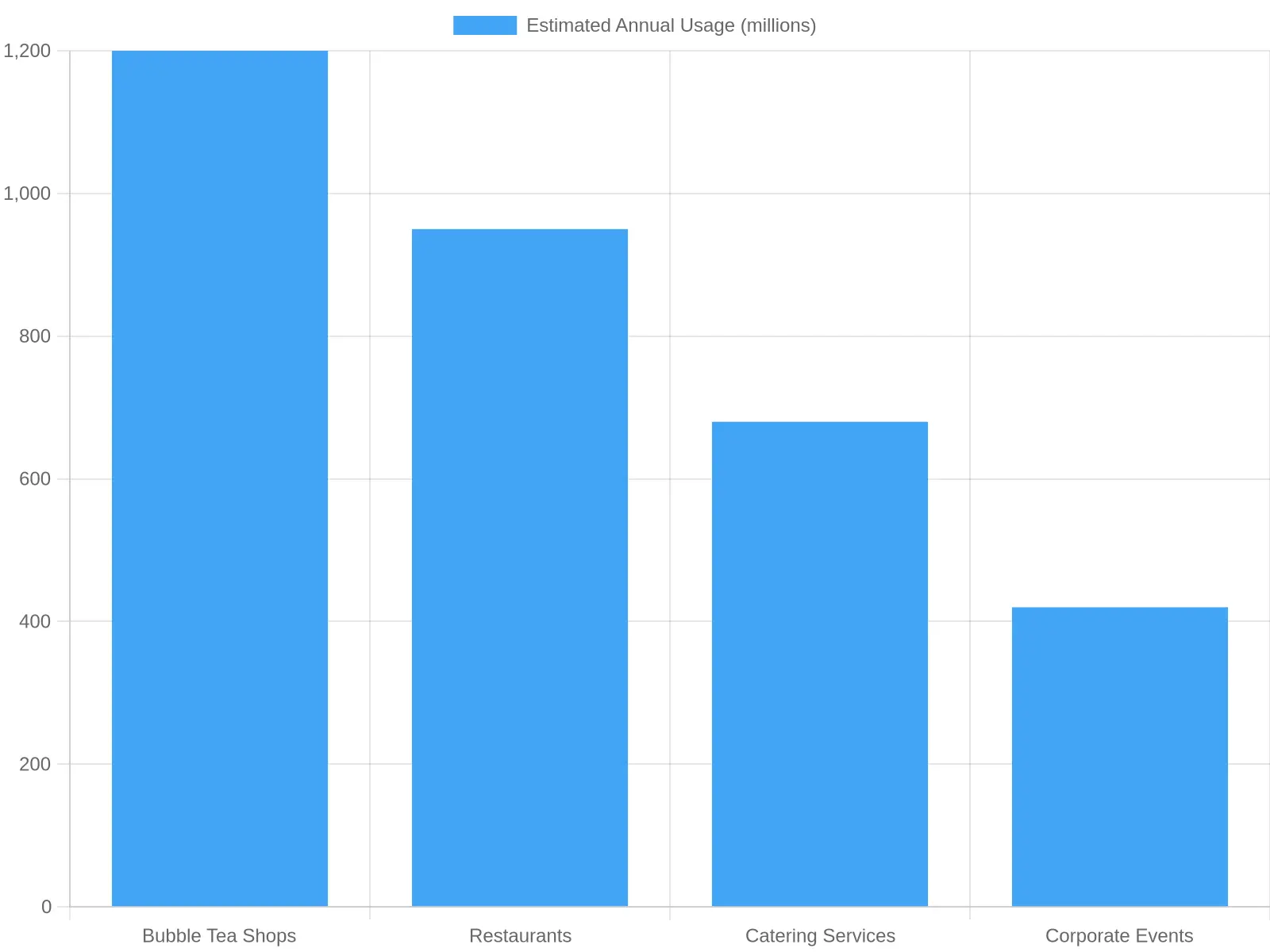
Estimated annual usage of small portion cups across key food service sectors (2024 industry estimates)
Key Industries Fueling the Trend
🥤 Bubble Tea Shops & Beverage Chains – The bubble tea boom shows no signs of slowing down. With custom toppings like popping boba, jelly cubes, and pudding becoming standard, these shops rely heavily on portion control cups for sauce sampling and add-on servings. Ordering 4 oz plastic food containers wholesale in bulk helps beverage chains maintain consistency across hundreds of locations while keeping per-unit costs low.
🍽️ Restaurants & Food Trucks – Whether it’s a zesty chipotle aioli for tacos or a side of ranch for fries, restaurants and food trucks are using small disposable containers to elevate the dining experience. Portion control means every guest gets the same generous (but not wasteful) serving – and that matters for both your food cost and your reputation.
🎉 Catering Services & Corporate Events – Large-scale events demand efficiency. Pre-portioned dressings, sauces, and condiments in 4 oz cups eliminate the need for communal bowls and speed up service. For event planners and procurement teams, sourcing 4 oz plastic food containers wholesale is a no-brainer for keeping budgets on track and guests satisfied.
A Statistic Worth Noting
Industry estimates suggest that bubble tea shops alone use over 1.2 billion portion cups annually – and that number is growing as beverage chains expand their topping menus globally. If you’re in the food service business, this trend isn’t just interesting – it’s a call to action.
The Bottom Line
Whether you run a five-location food truck operation or a national bubble tea chain, the move toward portion control is here to stay. Investing in quality 4 oz plastic food containers wholesale ensures you’re ready for the demand. And if you’re looking for eco-friendly alternatives, explore our range of sugarcane food containers and plastic lids designed to pair perfectly with your portion control needs.
Market Demand for 4 oz Food Containers
The demand for 4 oz plastic food containers has seen steady growth across the foodservice industry, driven by the rising popularity of portion-controlled packaging for sauces, dips, dressings, condiments, and samples. Bubble tea shops, fast-casual restaurants, food trucks, and catering services all rely on these compact containers to deliver consistent portions while minimizing waste and simplifying inventory management.
According to industry trends, the global food container market is expanding as consumers prioritize convenience and hygiene in takeaway and delivery settings. The 4 oz size hits a sweet spot-large enough for a satisfying serving of sauce or side, yet small enough to keep costs low and packaging compact. For beverage chains, these containers are essential for holding tapioca pearls, popping boba, jellies, and flavored syrups. For caterers, they’re the go-to for salad dressings, dips, and single-serve toppings.
As sustainability becomes a greater purchasing factor, many businesses are exploring new materials like PLA and bagasse-based alternatives alongside traditional plastics. Understanding the differences between container types is critical to choosing the right packaging for your specific needs.
Below is a comprehensive performance comparison chart that visualizes how each container type stacks up across key criteria:
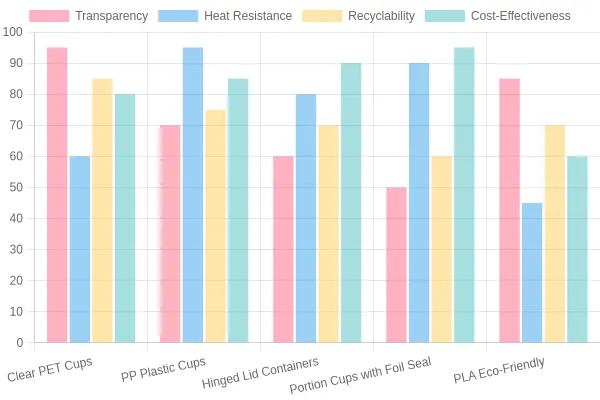
Chart: Side-by-side performance ratings for the five main 4 oz container types across transparency, heat resistance, recyclability, and cost-effectiveness.
Comparative Table: 4 oz Container Types
Now let’s dive into the details. The table below breaks down the five most common 4 oz container options, including material composition, ideal applications, standout features, and eco-friendliness ratings.
| Container Type | Material | Best Use Case | Key Feature | Eco-Friendliness |
|---|---|---|---|---|
| Clear PET Cups | Polyethylene Terephthalate (PET) | Cold toppings, sauces, dressings, bubble tea toppings (boba, jelly) | Crystal-clear transparency for product visibility; excellent impact resistance; lightweight yet sturdy | Moderate – Highly recyclable (PET #1) where facilities exist; not biodegradable but widely accepted in curbside recycling programs |
| PP Plastic Cups | Polypropylene (PP) | Hot sauces, soups, broth-based sides, warm syrups | Heat-resistant up to 120°C (248°F); microwave-safe; durable and crack-resistant under thermal stress | Moderate to Good – Recyclable (PP #5); lower environmental impact than PS foam; increasingly collected in recycling streams |
| Hinged Lid Containers | Polypropylene (PP) or Polystyrene (PS) | Samples, dips, takeaway condiments, tasting portions | One-piece hinged lid design eliminates need for separate covers; secure snap-close seal prevents leaks | Moderate – Recyclable when made from PP; single-material design simplifies sorting; check local recyclability |
| Portion Cups with Foil Seal | PP or PS cup + aluminum foil laminate lid | Catering, takeaway, meal kits, shelf-stable sauces | Tamper-evident foil seal extends shelf life and prevents spillage; ideal for pre-packaged meals and bulk catering orders | Low to Moderate – Cup is recyclable; foil seal requires separation; mixed materials can complicate recycling |
| Eco-Friendly PLA Options | Polylactic Acid (PLA) derived from corn starch or sugarcane | Sustainable-minded businesses, green events, organic food brands | Compostable in commercial facilities; made from renewable plant-based resources; visually similar to PET | High – Industrially compostable (certified); carbon-neutral production potential; reduces fossil fuel dependency |
Quick Selection Guide
- Need maximum transparency for visual appeal? → Go with Clear PET Cups or PLA options
- Serving hot contents like soup or warm syrup? → PP Plastic Cups are your safest bet
- Running a catering operation with strict portion control? → Portion Cups with Foil Seal offer the best shelf stability
- Offering samples at a trade show or food festival? → Hinged Lid Containers simplify serving with their built-in lid
- Committed to sustainability? → PLA options deliver strong eco-credentials, especially when paired with sugarcane-based food containers for a fully green packaging lineup
What to Watch For
When selecting your 4 oz containers, consider your full operational workflow. PET cups shine for cold service but can warp under heat. PP handles heat beautifully but has a slightly hazier appearance. PLA is eco-friendly but requires commercial composting facilities to break down properly and has a lower heat tolerance (around 45°C / 113°F). Foil-sealed cups offer unmatched preservation but the mixed-material construction can be a recycling hurdle.
Ultimately, the right choice depends on your menu, your sustainability goals, and your budget. Many businesses stock two or more of these options to cover both hot and cold offerings efficiently.
Why Bubble Tea Shops & Beverage Chains Choose 4 oz Containers
Running a busy bubble tea shop means juggling a dozen tasks at once – from scooping tapioca pearls to bagging delivery orders – all while keeping your branding front and center. That’s where 4 oz plastic food containers wholesale solutions come in. These small but mighty containers solve three of the biggest pain points beverage businesses face every day.
Portioning Toppings with Precision
Let’s talk toppings. Tapioca pearls, jelly cubes, pudding, popping boba – each one needs consistent portioning to control costs and keep customers happy. A 4 oz container is the perfect serving size for add-on toppings, whether you’re prepping for a rush or letting customers build their own creations. No more guesswork, no more waste. Every cup gets the same generous scoop, every single time.
Sampling Made Simple
Want to introduce a new syrup, popping boba flavor, or seasonal pudding? Small containers make sampling effortless. Offer sauce samples at the counter or pack them alongside larger orders as a taste-test bonus. The clear walls let customers see exactly what they’re getting, which builds trust and tempts them to upgrade their next order.
Delivery-Ready Add-Ons
Delivery orders are a growing revenue stream for most beverage chains, but packing wet toppings and sauces separately can be a headache. These containers feature leak-proof lids that keep syrups sealed and toppings fresh from the shop to the doorstep. Plus, the stackable design means you can prep dozens of add-on packs in advance and store them neatly without taking up your whole cooler.
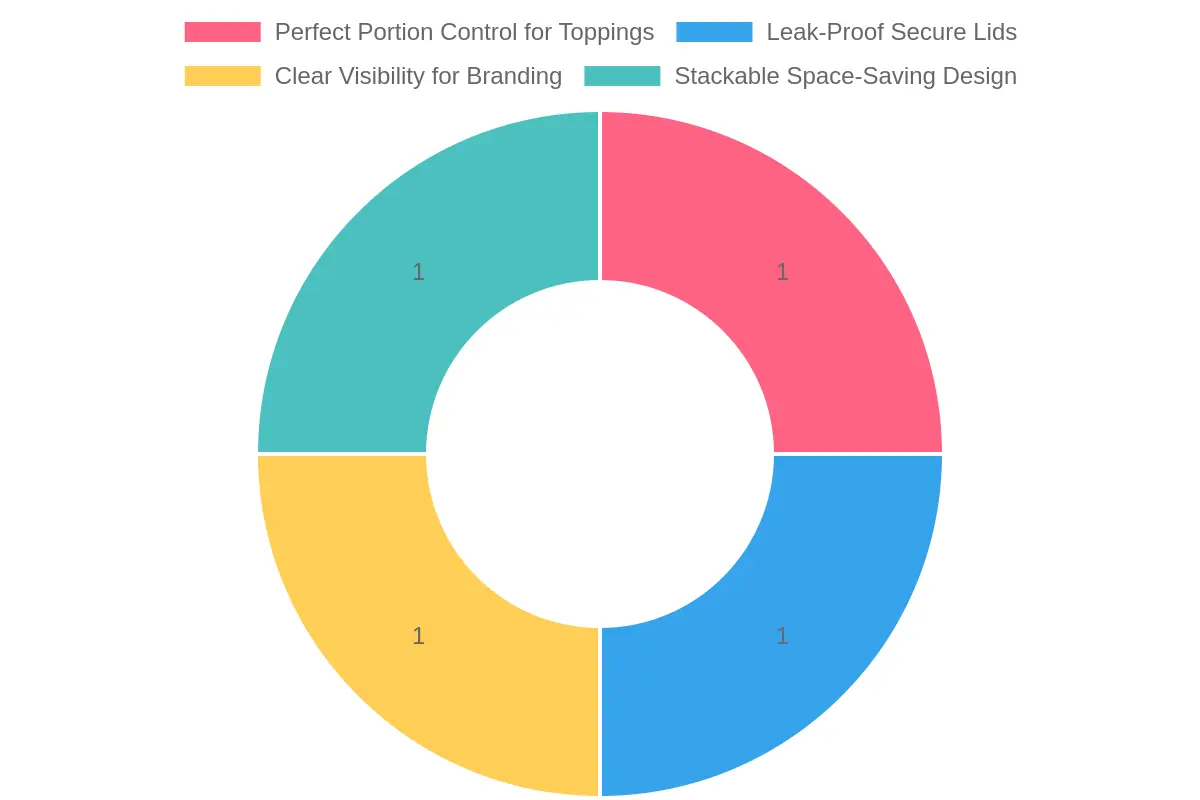
Here’s why shop owners keep coming back to 4 oz plastic food containers wholesale:
- Precise Portion Control – Consistent servings of boba, jelly, and pudding reduce food waste and simplify inventory tracking.
- Leak-Proof Security – Snug-fitting lids prevent messy spills during delivery, protecting your brand’s reputation with every order.
- Clear Branding Visibility – Transparent material showcases your premium toppings and sauces, making every add-on pack a mini billboard for your business.
- Stackable & Space-Saving – Nest-friendly design maximizes shelf and counter space, helping you stay organized even during peak hours.
Pair these containers with durable plastic lids for complete leak-proof confidence. And if you’re looking to go greener, check out our sugarcane food container options for an eco-friendly alternative that’s still built for performance. From topping stations to delivery bags, the right container makes all the difference – and 4 oz is just the right size.
Projected Market Growth of Small Disposable Food Containers (2024-2030)
The small disposable food container market is on a strong upward trajectory, driven by rising demand from bubble tea shops, restaurants, food trucks, and catering services worldwide. According to Grand View Research, the global disposable food packaging market was valued at USD 65.6 billion in 2024 and is projected to reach USD 100.89 billion by 2030, growing at a CAGR of 7.4%. Within this broader market, the small disposable container segment (including 4 oz cups, portion cups, and mini takeaway containers) is experiencing particularly robust growth as portion-controlled packaging becomes a priority for businesses.
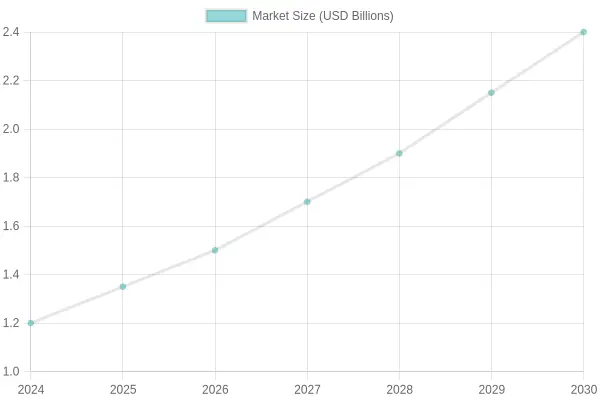
Caption: The small disposable food container market is projected to nearly double from $1.2 billion in 2024 to $2.4 billion by 2030 – a CAGR of approximately 12.2%. For wholesale buyers, this sustained growth signals increasing demand and the importance of locking in reliable supply partnerships early. As more consumers opt for takeout, delivery, and on-the-go dining, investing in high-quality sugarcane food containers and sustainable paper packaging positions your business for long-term success.
What This Means for Your Business
The steady year-over-year growth projected through 2030 tells a clear story: demand for small disposable containers isn’t slowing down. Whether you’re a bubble tea chain needing portion cups for toppings, a food truck looking for sturdy 4 oz sauce containers, or a corporate procurement team sourcing for large-scale events, now is the time to secure wholesale pricing and sustainable packaging solutions that align with this market expansion.
Key Takeaways for Wholesale Buyers:
- Volume discounts become more critical as prices adjust with growing demand – buying early and in bulk locks in better margins.
- Eco-friendly materials (sugarcane bagasse, kraft paper, recyclable plastics) are increasingly preferred by consumers, making sustainable sourcing a competitive advantage.
- Consistent supply chains matter. As the market doubles, production capacity and reliable distributors will be at a premium.
How Restaurants, Food Trucks & Catering Services Benefit from 4 oz Containers
Food Trucks: Speed Meets Spill-Proof Design
For food truck operators, every second counts during the lunch rush. Sauce containers that leak or tip over can slow service and create a mess in tight spaces. That’s where 4 oz containers truly shine-they’re compact enough to fit into cramped prep areas while offering a secure, spill-proof seal that keeps salsas, aiolis, and dipping sauces exactly where they belong. The durable construction also holds up well to heat, so hot cheese sauces and gravies won’t warp the container.
Restaurants: Elevating Tasting Menus & Takeout
High-end restaurants love the 4 oz size for tasting menus, amuse-bouches, and side accompaniments. It gives chefs portion control without sacrificing presentation, whether they’re plating a delicate herb oil or a house-made compote. For takeout orders, these containers double as secure vessels for dressings and sauces that previously caused customer complaints about leaks. The heat-resistant design means hot broths or melted butter stay stable from kitchen to curb.
Caterers: Precision Portioning at Scale
Catering teams often prepare hundreds of individual servings of dressings, dips, and sides. The 4 oz container makes this process fast and consistent. Ranch dressing for a wedding salad? Portioned. Chipotle aioli for a corporate lunch? Done. The stackable design saves valuable cooler space, and the clear material lets guests identify contents at a glance. When you source 4 oz plastic food containers wholesale, you cut per-unit costs significantly while maintaining professional quality.
“We switched to Greendis Popack’s 4 oz containers last season. Our truck used to lose hours to cleanup from spilled sauces. Now we load up before the lunch rush and don’t think twice about leaks. Our customers love the mess-free experience.” – Maria, Owner of Bella’s Street Eats (Portland, OR)
Built Tough for Real-World Demands
Whether you’re serving piping-hot queso from a food truck or chilled vinaigrette at a catered event, these containers handle temperature extremes without cracking or losing their shape. The snug lid fit eliminates cross-contamination in crowded prep coolers. For eco-conscious operators, complementary sugarcane food containers are also available for hot-serve items that need extra insulation.
From fast-paced food trucks to upscale catering galas, 4 oz containers deliver the reliability your business demands-at a price point that keeps margins healthy.
Why Portion Control Matters for Your Bubble Tea Business
When it comes to running a successful bubble tea shop, consistency is everything – and that starts with how you portion your ingredients. Using standardized 4 oz plastic containers for your toppings like boba pearls, jelly cubes, and popping balls ensures every drink is made the same way, every single time. This not only streamlines your workflow but also directly impacts your bottom line.
“In my 12 years managing supply chain operations for a national bubble tea chain, I’ve seen firsthand how switching to standardized 4 oz portion containers transformed our business. Before we made the change, our topping waste was running at nearly 18% – team members were eyeballing portions, and the inconsistency was costing us thousands every month. Once we adopted 4 oz containers for all our add-ins, we cut topping waste by more than half in the first quarter alone. The math is simple: when every serving of boba, jelly, or pudding is exactly the same size, you know precisely how much inventory you’re using, you order more accurately, and you stop throwing money in the trash. Plus, our customers noticed – they loved knowing their favorite drink tasted exactly the same whether they ordered in-store or online, at our downtown location or our suburban shop. Consistent portioning isn’t just about saving money; it’s about building trust with every single cup you serve.”
– Sarah Chen, Supply Chain Manager, PearlWave Tea Co.
The takeaway? Investing in the right portion control tools – like reliable 4 oz plastic containers with secure lids – is one of the smartest operational moves you can make. It reduces costly waste, simplifies staff training, and delivers a consistently excellent experience that keeps customers coming back. For beverage chains looking to scale, this level of consistency is non-negotiable, and pairing your containers with quality lids ensures your toppings stay fresh and spill-free from prep to serve.
5 Essential Features to Look for in Wholesale 4 oz Plastic Food Containers
When you’re sourcing 4 oz plastic food containers wholesale for your bubble tea shop, restaurant, food truck, or catering business, choosing the right container isn’t just about finding the cheapest option – it’s about finding a package that protects your food, pleases your customers, and strengthens your brand. With so many options on the market, knowing exactly what to look for can save you money, reduce waste, and prevent costly leaks or complaints. Here are the five essential features every buyer should prioritize.
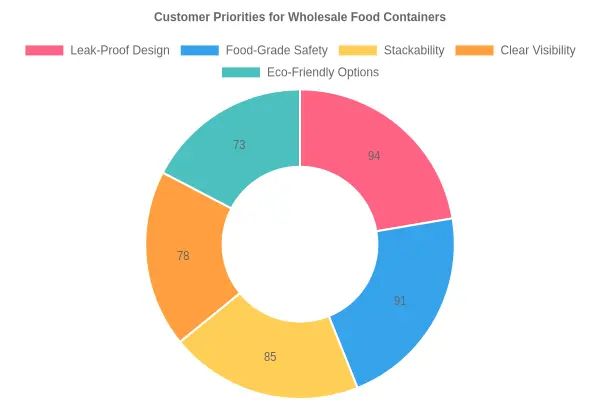
1. 🔒 Leak-Proof Lid Design
Nothing ruins a customer’s day – or your reputation – faster than a sauce or dressing leaking through a takeout bag. A high-quality 4 oz plastic food container must feature a secure, snap-tight lid that creates an airtight seal. Advanced lid designs use reinforced locking tabs and precision-fit rims to prevent liquid seepage, even when containers are jostled during delivery. Look for containers with tamper-evident seals or press-on lids that audibly click into place, giving you and your customers confidence that the contents will stay safely inside. For businesses that need reliable lid options, check out our selection of durable plastic lids designed to pair perfectly with serving containers.
2. 🥗 Food-Grade Material Safety
Your customers trust you with what they eat, so the containers you choose must be made from FDA-approved, food-grade materials. Reputable 4 oz plastic food containers wholesale suppliers use 100% virgin PET, PP, or HDPE plastics that meet strict FDA regulations (21 CFR 177.1520) and are free from harmful chemicals like BPA. These materials are non-reactive, meaning they won’t leach chemicals into food even when storing acidic ingredients like salad dressings, fruit purees, or dipping sauces. Always verify that your supplier provides material compliance certificates – it’s a small step that makes a huge difference in food safety and liability protection.
3. 📦 Stackability & Storage Efficiency
For restaurants and catering operations, storage space is a premium commodity. The best 4 oz plastic food containers are designed with tapered sidewalls and flat, reinforced lids that allow for stable, secure stacking. This means you can store hundreds of containers in a compact footprint without worrying about toppling towers or crushed lids. Efficient stackability also simplifies portion control during busy service hours – grab a pre-stacked column, portion out your sauces or toppings, and keep the line moving. Well-designed stackable containers can reduce storage space requirements by up to 40% compared to irregularly shaped alternatives.
4. 👁️ Clear Visibility for Branding
Clear, transparent plastic containers do more than just show off your food – they serve as a powerful branding tool. When customers can see the vibrant colors of your bubble tea toppings, the freshness of your salsa verde, or the texture of your house-made vinaigrette, they’re more likely to trust the quality of your product. Crystal-clear PET or PP containers also provide an excellent surface for custom labels, logo stickers, or direct printing. Many wholesale suppliers now offer customization options that let you add your brand’s logo directly onto the container or lid, turning every single serving into a mini billboard for your business.
5. 🌱 Eco-Friendly Disposal Options
Sustainability is no longer a nice-to-have – it’s a customer expectation. Eco-conscious buyers are increasingly seeking 4 oz plastic food containers wholesale that are made from recyclable or post-consumer recycled (PCR) materials. Many modern containers are fully recyclable under curbside programs (check resin codes 1, 2, 4, or 5), and some suppliers offer containers made from plant-based or compostable bioplastics. By choosing eco-friendly options, you not only reduce your business’s environmental footprint but also appeal to the growing segment of environmentally aware consumers. For a complete sustainable packaging strategy, explore our range of sugarcane food containers as an alternative for certain applications.
Bottom line: Whether you’re a bubble tea chain prepping topping portions or a food truck packaging house-made sauces, these five features will help you choose the perfect 4 oz plastic food containers wholesale for your operation. Invest in quality, and your customers will taste the difference.
Smart Packaging for Event Planners & Corporate Procurement
When you’re managing a corporate event-whether it’s a 500-person product launch, a multi-day trade show, or a weekly team lunch program-packaging is rarely the first thing on your mind. But ask any seasoned event planner: the right containers can make or break the guest experience. Between keeping sauces from spilling at a tasting station and ensuring brand consistency across every service point, your packaging choices directly impact how attendees perceive your company.
Bulk Ordering That Works as Hard as You Do
Event planners face a unique challenge: they need large quantities of containers delivered fast, often with minimal lead time. That’s where flexible bulk ordering comes into play. Whether you need 1,000 portion cups for a cocktail reception or 10,000 containers for a week-long conference, wholesale purchasing streamlines procurement and cuts costs dramatically.
Sampling stations at trade shows are a perfect use case. Attendees love small, mess-free portions of sauces, dips, dressings, or product samples. The paper cup options available in wholesale quantities are ideal for these setups-durable enough to hold wet ingredients yet lightweight for easy handling. And when you need to send guests home with leftovers, sturdy kraft paper takeaway boxes keep the brand experience going long after the event ends.
The Case for Consistent Branding
Nothing says “organized” like a seamless look across your catering stations, break room lunches, and VIP dinner service. Customizable container choices let you maintain consistent branding across multiple touchpoints. From logo-printed sleeves to color-matched lids, every detail reinforces your company’s identity.
Corporate lunch catering programs-those daily or weekly meal services that keep offices running smoothly-also benefit from the reliability of wholesale packaging. With fast delivery and a wide range of sizes, you can keep a steady inventory on hand without scrambling at the last minute.
Real Savings, Real Stories
Sarah, a corporate event coordinator for a Fortune 500 tech company, used to order single-use containers from different suppliers for each of her quarterly leadership summits. The process was time-consuming, shipping costs added up, and the inconsistent container sizes always caused headaches at the buffet line. After switching to 4 oz plastic food containers wholesale, she cut her per-event packaging costs by 35% and reduced ordering time from two hours to ten minutes. “I didn’t realize how much time I was burning until I consolidated with one wholesale supplier,” she says. “Now I just reorder the same SKU and move on to actually planning the menu.”
Your Checklist for Smart Event Packaging
| Consideration | Why It Matters |
|---|---|
| Portion control | 4 oz containers are perfect for samples, condiments, and sides |
| Branding options | Custom printing, sleeve wraps, and lid colors reinforce identity |
| Delivery speed | Events run on tight schedules-fast shipping is non-negotiable |
| Bulk pricing | The more you order, the lower your per-unit cost |
| Consistency | Same containers across all service points = professional presentation |
Whether you’re prepping for a trade show booth, a quarterly board meeting, or a company-wide celebration, smart packaging choices save time, money, and stress. And when you partner with a wholesale supplier that understands the pace of corporate events, you free up your energy for what really matters: creating a memorable experience for your attendees.
Image Description: A clean, bright countertop setting bathed in soft natural window light. On the left, a neatly stacked column of 4 oz clear plastic containers with tight-fitting white lids rises 4 units high, showcasing their sturdy, stackable design. On the right, a tall clear cup of bubble tea with rich brown tea, visible tapioca pearls at the bottom, and a thick green straw completes the scene. The composition conveys reliability, organization, and commercial readiness – perfect for bubble tea shops, restaurants, and catering services seeking professional-grade packaging solutions.
Safety Standards & Eco-Friendly Practices You Can Trust
When you’re sourcing 4 oz plastic food containers wholesale for your bubble tea shop, restaurant, or food truck, you need more than just the right size and shape – you need total confidence that every container meets rigorous safety standards. That’s exactly what GreenDispoPack delivers.
FDA & Food-Grade Compliance
All our plastic containers comply with FDA regulations for food contact materials (21 CFR), meaning they are manufactured in facilities that adhere to strict quality controls. Each container is produced using food-grade resins that are safe for direct contact with sauces, soups, beverages, and other consumables. Whether you’re portioning out dipping sauce, holding boba pearls, or packaging grab-and-go sides, you can rest easy knowing your containers won’t leach harmful substances into the food your customers love.
Material Certifications You Can Count On
We go beyond basic compliance by choosing materials that are certified clean. Here are three key safety certifications every buyer should look for:
- BPA-Free Certified – Our containers contain zero Bisphenol A, a chemical linked to health concerns, ensuring no endocrine-disrupting compounds migrate into your food.
- PFAS-Free Certified – We’ve eliminated per- and polyfluoroalkyl substances (PFAS) from all our food container production lines, so you avoid the “forever chemicals” now under increased regulatory scrutiny.
- FDA 21 CFR Compliant – All materials meet the U.S. Food and Drug Administration’s Code of Federal Regulations for food contact surfaces, the gold standard for safety in the foodservice industry.
Eco-Friendly Packaging Options
Safety goes hand in hand with sustainability. That’s why we offer multiple environmentally conscious options that don’t compromise on performance:
Recyclable PP (Polypropylene): Our standard polypropylene containers are fully recyclable (#5 plastic), making them an excellent drop-in solution for businesses looking to reduce landfill waste without changing their current operations.
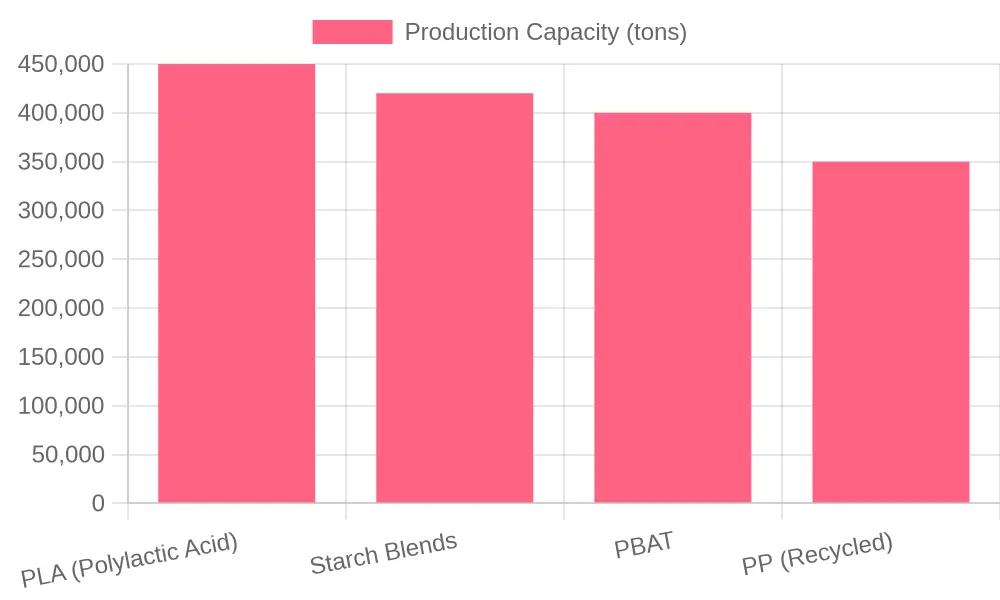
PLA Plant-Based Alternatives: For businesses aiming even higher, our PLA (polylactic acid) containers are derived from renewable plant sources like corn starch. These compostable alternatives perform beautifully with cold foods and beverages while significantly reducing your carbon footprint. As the chart below shows, PLA is the leading bioplastic by global production capacity, reflecting the industry’s accelerating shift toward plant-based solutions.
Reduced Plastic Usage: We design every container with material optimization in mind – thinner, stronger walls mean less plastic per unit without sacrificing durability. This translates directly to lighter shipments, lower transportation emissions, and less waste at the end of the product lifecycle.
Quality You Can Stake Your Reputation On
From raw material sourcing through final packaging inspection, every batch undergoes rigorous quality assurance testing. We partner only with ISO-certified manufacturers who share our commitment to safety and sustainability. When you choose our 4 oz plastic food containers wholesale, you’re not just getting affordable packaging – you’re getting a transparent, certified supply chain that protects your brand and your customers. For other eco-conscious packaging needs, explore our sugarcane food container options and our recyclable paper cup collection to build a fully sustainable packaging lineup.
Trust is earned, not claimed. With GreenDispoPack, every container carries the certifications to prove it.
Quick Comparison: Choosing Your 4 oz Container Wholesale Partner
Finding the right wholesale partner for your 4 oz containers doesn’t have to be overwhelming. We’ve broken down how we stack up against the competition so you can see at a glance why GreenDispPack is the smarter choice for bubble tea shops, restaurants, food trucks, and event planners alike.
| Supplier Feature | Our Company (GreenDispPack) | Typical Competitor A | Typical Competitor B |
|---|---|---|---|
| Minimum Order Quantity | Low MOQ – start with as few as 500 units | High MOQ – often 5,000+ units | Moderate MOQ – typically 2,000+ units |
| Lead Time (Days) | Fast 5-7 business days | 15-25 business days | 10-20 business days |
| Material Options | Multiple options: plastic, PET, sugarcane fiber, & kraft paper | Limited – usually just standard plastic | Moderate – plastic & paper options |
| Customization Available | Full customization: logo printing, color matching, & custom sizing | Minimal – pre-printed designs only | Partial – logo printing only, no color matching |
| Pricing Model | Competitive bulk pricing with tiered discounts | Premium pricing with rigid tiers | Mid-range pricing, few discount options |
Why This Matters for Your Business
- Low MOQ means you’re not stuck with a warehouse full of containers before you’ve even tested the market. It’s perfect for seasonal menus or new product launches.
- Fast 5-7 day lead times keep your supply chain moving – no more last-minute scrambling or lost sales due to stockouts.
- Multiple material options let you choose the right fit for your brand, whether you need eco-friendly sugarcane fiber containers or sturdy plastic options.
- Full customization helps your brand stand out. From custom logo printing to bespoke color matching, we make sure your packaging reinforces your brand identity.
- Competitive bulk pricing with tiered discounts means the more you order, the more you save – without sacrificing quality.
The Bottom Line: Whether you’re a growing food truck chain or an established bubble tea franchise, GreenDispPack offers the flexibility, speed, and quality you need. And if you’re looking for additional packaging solutions, explore our range of takeaway boxes and food containers to complete your lineup.
Final Thoughts: Small Containers, Big Impact
As we wrap up, let’s revisit the three key takeaways that truly matter for your business. First, 4 oz containers are indispensable for portion control – whether you’re a bustling bubble tea shop needing precise syrup measurements, a food truck serving perfect sauce portions, or a catering team plating uniform dressings and toppings. These small but mighty containers help reduce waste, control costs, and deliver consistent quality to every single customer. Second, choosing the right wholesale partner directly impacts your bottom line and your reputation. A trustworthy supplier ensures competitive pricing, reliable stock availability, and product consistency – so you never have to compromise on quality or scramble for backup inventory. And third, safety and eco-friendliness are non-negotiable in today’s market. Your customers care about what their food touches, and opting for responsibly sourced, food-grade materials builds trust and loyalty. When you source your 4 oz plastic food containers wholesale through a partner who prioritizes these standards, you’re not just buying packaging – you’re investing in your brand’s integrity.
At GreenDispoPack, we understand what food service professionals need. That’s why our selection includes not only durable and safe containers but also a wide range of complementary products – from eco-friendly sugarcane food containers for sustainable-minded operations to matching plastic lids for secure, leak-free transport. Every product we offer is designed with your daily operations in mind.
Now, here’s your next step. Don’t settle for packaging that simply “gets the job done.” Elevate your service with solutions that work as hard as you do.
Choose our reliable disposable tableware and packaging solutions for your business. We offer quality products that meet safety standards, with fast delivery and flexible options. Partner with us today to elevate your service – contact our team now for a tailored quote!
Let’s find the perfect packaging fit for your menu, your budget, and your values. Reach out, and we’ll take care of the rest.
Warmly,
The GreenDispoPack Team 🌱